


Jess Mah launched her first six-figure business in middle school. Today, she runs Mahway, a venture firm that incubates startups across fintech, biotech, and AI. Before Mahway, Jess was the co-founder and CEO of inDinero, a company providing accounting and tax services which she scaled to over 200 employees and landed on the Inc. 500 list. She’s been on the founding team of 10+ companies collectively valued at over $1 billion.
Jess studied Computer Science at U.C. Berkeley and has been grateful to be recognized by Forbes 30 Under 30 and Fast Company’s Most Creative People in Business.
She was the youngest woman accepted into Y Combinator in 2010, the youngest to join YPO in 2013, and the youngest graduate of Harvard Business School’s Presidents’ Program in 2024.
At 11, She Made Six Figures — and Skipped Recess to Code
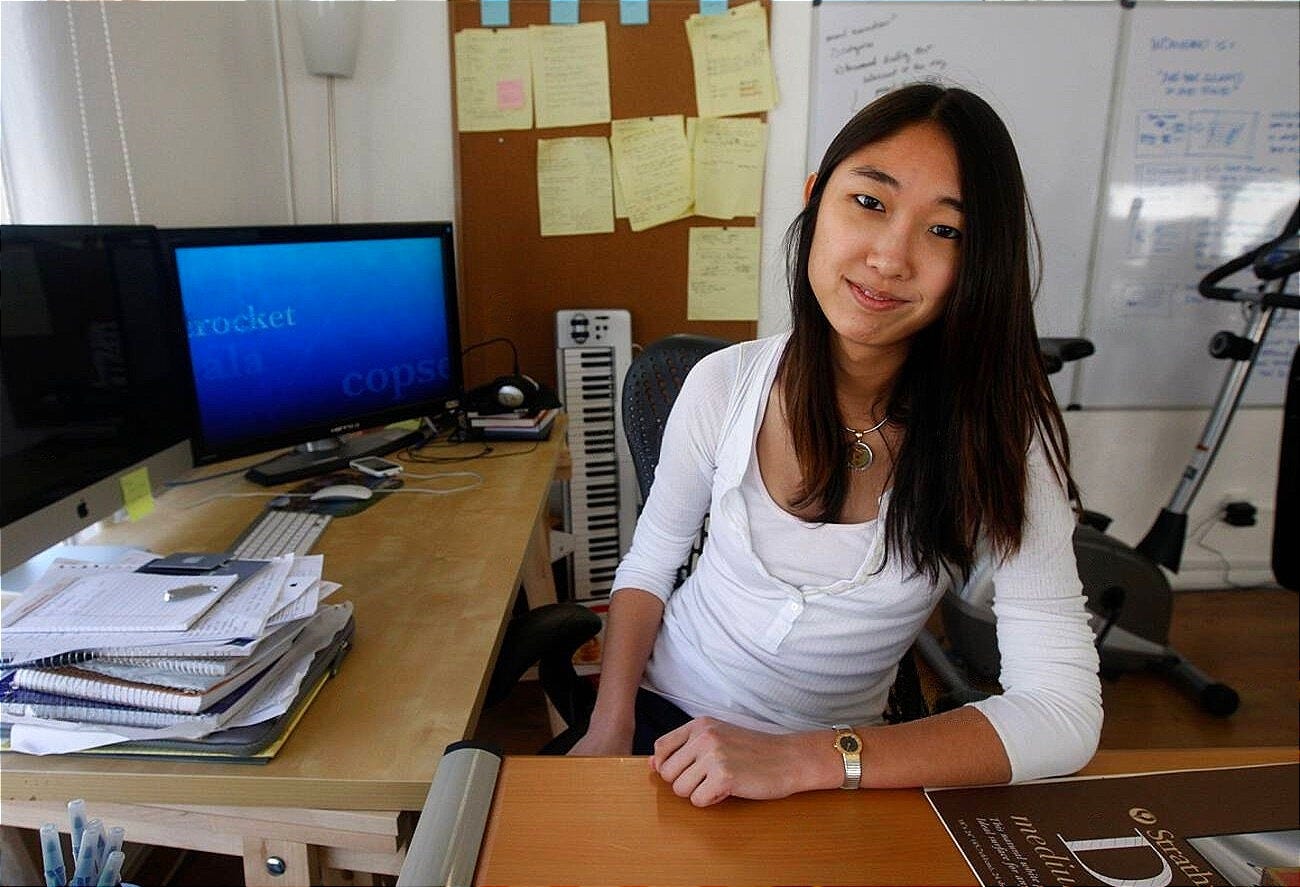
In the quiet hum of Westchester County, where the 1990s unspooled in a rhythm of tidy lawns and predictable futures, the Mah household moved to a different beat. It was the sound of enterprise, a low thrum that emanated from her mother, an immigrant who had arrived from Hong Kong with just “two suitcases and a dream.” She never went to college, instead finding her footing in the American landscape by building a clothing manufacturing and design business from the ground up. From the minute a young Jess Mah would wake up, her mother was already at work; when she returned from school, she was still there. It was a relentless education in hustle, watching a business take shape stitch by stitch in the space between home and factory. From her father, who spent his days at Sloan Kettering, she inherited the other side of her wiring: a “nerdy engineering side,” a fascination with systems and logic that complemented the entrepreneurial fire.
By age ten, she had taught herself to code, and by eleven, the nascent commercial internet became her first real territory. While other kids traded baseball cards, she launched a business hosting servers wholesale, then another at thirteen selling computer parts on eBay. These were not hobbies; her first venture was soon pulling in “low six figures,” a sum that baffled her teachers. Her blossoming career was a solo pursuit, a world she built for herself in the quiet hours after homework. At school, she was an outlier, she ate her lunch alone, taking her tray down the hall to the computer club, only to find herself an outsider there, too.
The friction between her world and the world of bells and report cards was constant. Teachers would call home, their voices laced with concern, reporting that she was “working on business... during recess and during lunch” instead of making friends. The calls were meant to course-correct, to nudge her back into the box drawn for children. But her parents would listen, turn to her, and offer a quiet affirmation. They'd relay the feedback, then say, yeah, you're right. This isn't actually a problem. You should just do whatever you want, but be respectful. It was a radical form of trust, one that both empowered and emboldened her. It was aggravating that her teachers wouldn’t be supportive, but their dissent only sharpened the clarity of her own path. This dynamic came to a head when the principal called her and her mother in, his face stern. It wasn't just the businesses anymore. She was a moderator for RateMyTeacher.com, approving and deleting comments. This, the principal insisted, had to stop. But her parents stood by her, their quiet backing a shield against institutional authority. That support, she would later reflect, “just enhanced my relationship with my parents,” cementing a foundational alliance that would carry her far beyond the schoolyard.
Throwing College Parties for Billionaires
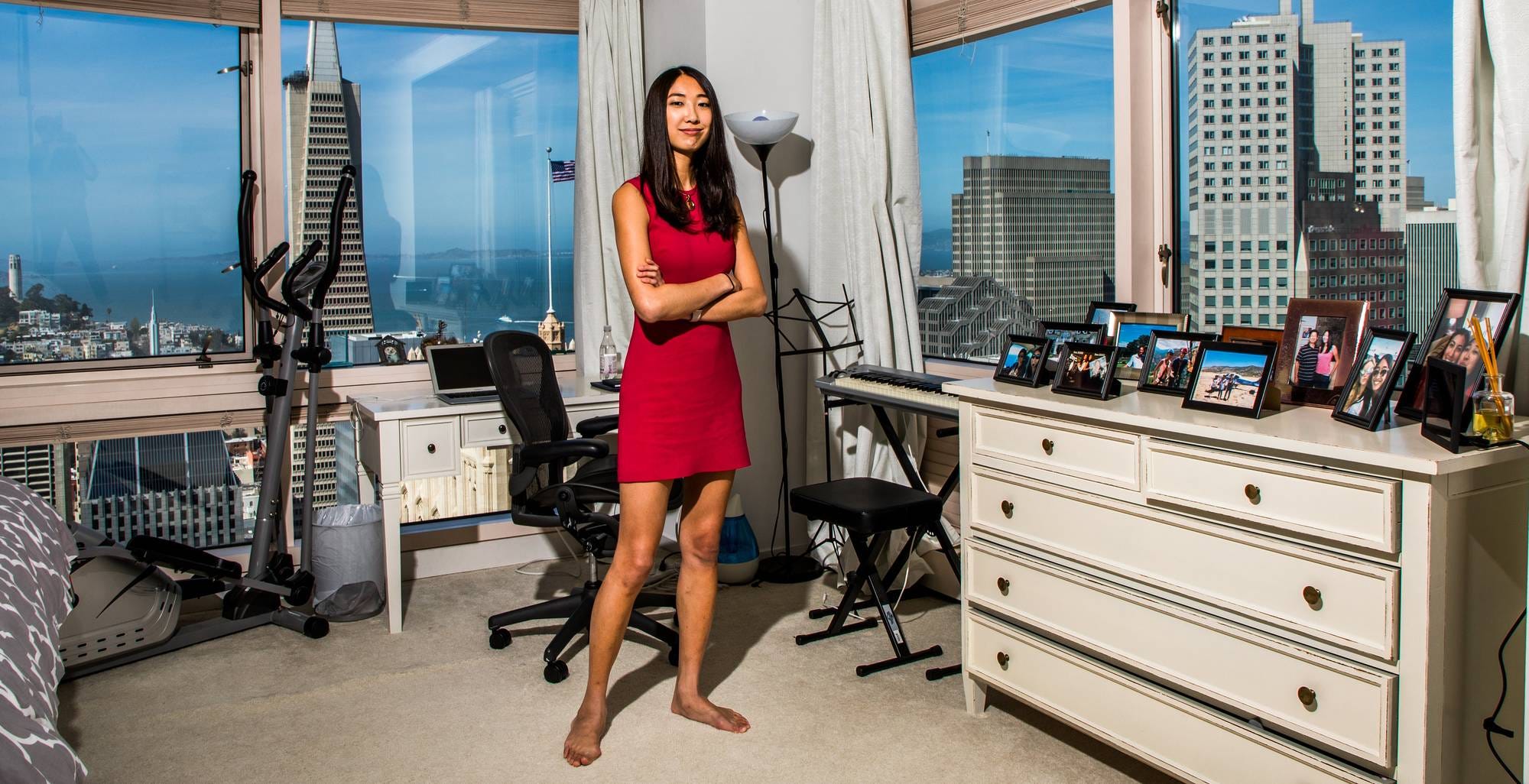
The walls of high school felt too close, the pace too slow. An insistent internal clock was ticking, a feeling of being in a “rush to get out into the real world” that made the ordinary rituals of adolescence feel like a delay. At fifteen, she made her exit, leaving behind the familiar corridors for an accelerated program: Bard College at Simon's Rock. It was a calculated leap, a way to compress time. By seventeen, she had an associate's degree in hand and was walking the sprawling campus of UC Berkeley, a transfer into its computer science program. California in the late 2000s was a landscape electric with possibility, a place where the line between a dorm room and a world-changing company was perilously thin, and she had no intention of wasting a moment.
At Berkeley, she found her way, not in the lecture halls, but in the spaces between them. When the computer science association held an election for president, she was nominated. No one else wanted the job, so by default, it was hers. She saw it as an opportunity, making it her mission to “raise as much money for the club as possible and throw great events.” Every two weeks, she would conjure a speaker from the burgeoning tech scene, luminaries like Drew Houston from Dropbox or a young Sam Altman, years before OpenAI. She’d buy deep-dish pizza, and in the air of a university common room, the future was being forged. The speakers weren't just guests; they became “friends and mentors,” a network built not through formal introductions but through a shared sense of mission and a willingness to show up.
She chronicled these encounters on a blog, a digital extension of her real-world curation. The posts were raw and observant, and they found their way onto the screens that mattered. One day, an email landed in her inbox from Paul Graham of Y Combinator.
“Hey, you should come by for dinner.”
The Youngest Woman in Y Combinator History
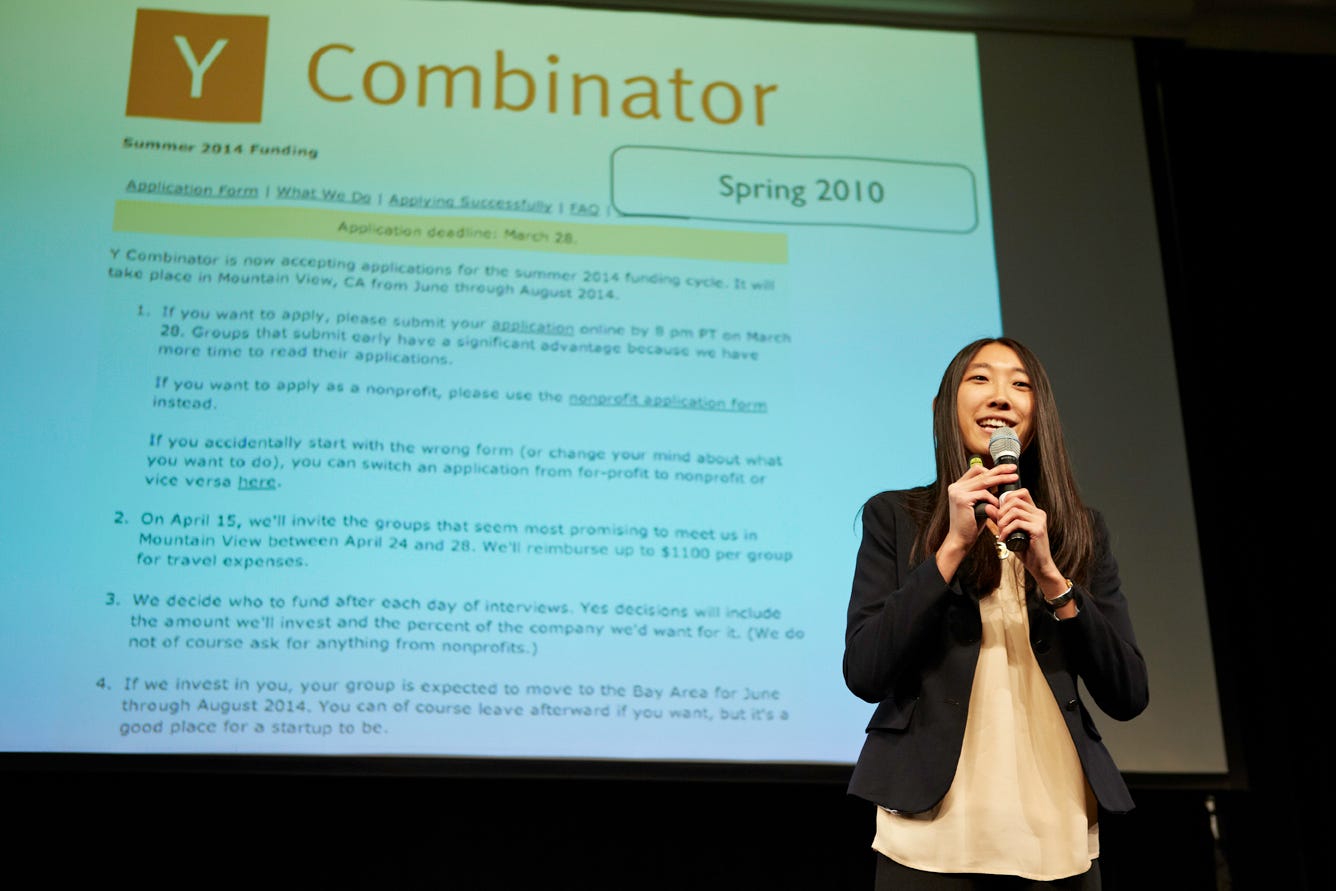
The invitation felt like a summons to the major leagues. The pull to drop out was immense, but a mentor from Rackspace, a veteran of an earlier tech boom, offered a piece of grounding advice: your business ideas they're gonna be there still, but your last year of college... you shouldn't drop out. She heeded the counsel, a rare moment of patience in a life defined by speed. She finished her degree, graduating at nineteen. With her application reviewed and polished by Sam Altman himself, she applied to the program that had become the very center of Silicon Valley gravity. In the summer of 2010, she was accepted, becoming, at the time, “the youngest woman to join Y Combinator.” The real world had arrived.
With her co-founder Andy Su, she moved with the ferocious speed the program demanded. Just one month in, they launched inDinero. The concept was simple: a “Mint.com for businesses.” Mint had just sold for a staggering sum, and the comparison was an easy shorthand for a grand vision, one that promised to bring clarity and control to the chaotic finances of small companies.
The launch was a splash. TechCrunch, Mashable ran with the story, and the sign-ups poured in by the thousands. It was a rush of validation, the kind of immediate traction that founders dream of. But beneath the surface of the glowing metrics, a fundamental misunderstanding was beginning to crack through. She would soon admit that she “didn't really understand the feedback for why people were not investing in the business.” The idea of "small business" was a mirage. While government data pointed to tens of millions of them, the reality was that most were “micro businesses and they have no money. They don't really want to pay a lot.” The napkin math, once so promising, turned brutal under scrutiny. At twenty or thirty dollars a month, building a billion-dollar business required a scale that was almost unimaginable.
The truth arrived in a slow, painful drip of customer data. Churn was devastatingly high. She would get on the phone, calling the very customers who had given the product five-star satisfaction scores, trying to understand why they were leaving. The answers were a lesson in market reality. Oh well, you know, just ran out of money, some would say, the casual confession of a dream deferred. Others were more pragmatic: oh well my accountant wants us to use QuickBooks. They liked what her company did, but it didn't displace the gravitational pull of the industry standard. InDinero was a vitamin, not a painkiller. This was her first encounter with the chasm between a beautiful idea and a viable one, the dawning, terrifying realization that the initial, simple logic was not the “path to salvation.”
She Fired Everyone but Herself
By late 2011, a year and a half in, the money was nearly gone, and the early buzz had faded into the silence of venture capitalists declining to fund the next round. The realization that the company had to be fully rebooted was not a gentle dawning but a violent impact. “Oh, yeah, that’s painful,” she would recall, the memory still sharp. The failure felt personal, a betrayal of the neat, upward trajectory she had engineered for her entire life. She was the girl who had done everything right. Skipped two years of school, made the dean’s list, became president of the computer science club, yet now she was facing a collapse.
The frustration was a physical force. Alone in her apartment, the weight of it became unbearable. She was “crying… punching my pillow I was so pissed.” Beneath the anger was a deep, mortifying fear of embarrassment, a dread that “Paul Graham’s going to be embarrassed by me.” The mentors who had believed in her, the ecosystem that had anointed her—it felt like she was letting all of them down. This, she would later understand, is where true learning begins. “We don't really learn about endurance and grit until we have those super severe setbacks,” a lesson that can't be taught in a classroom or absorbed from a blog post. It must be lived.
In that time of failure, a cold resolve took hold. She had to “lay everyone off and cut the burn... and just fully reboot the company.” It was a brutal, surgical decision, dismantling the very team she had just assembled. The office emptied out, the payroll vanished, and in the quiet that followed, she became the entire company. The pivot was not just a strategy on a whiteboard; it was a complete transformation of her existence. Her days were spent on the phone, selling a new, high-touch service model with large per-client fees she had willed into being. Her nights were spent hunched over a keyboard, designing and coding the product she had just sold, her face illuminated by the glow of the screen. She would wake up in the early a.m. and begin the cycle again, a relentless, all-consuming rhythm of building and selling, selling and building. It was a terrible, isolating period, but in that singular focus, she was building a new muscle, forging a capacity for reinvention that would become the core of her survival.
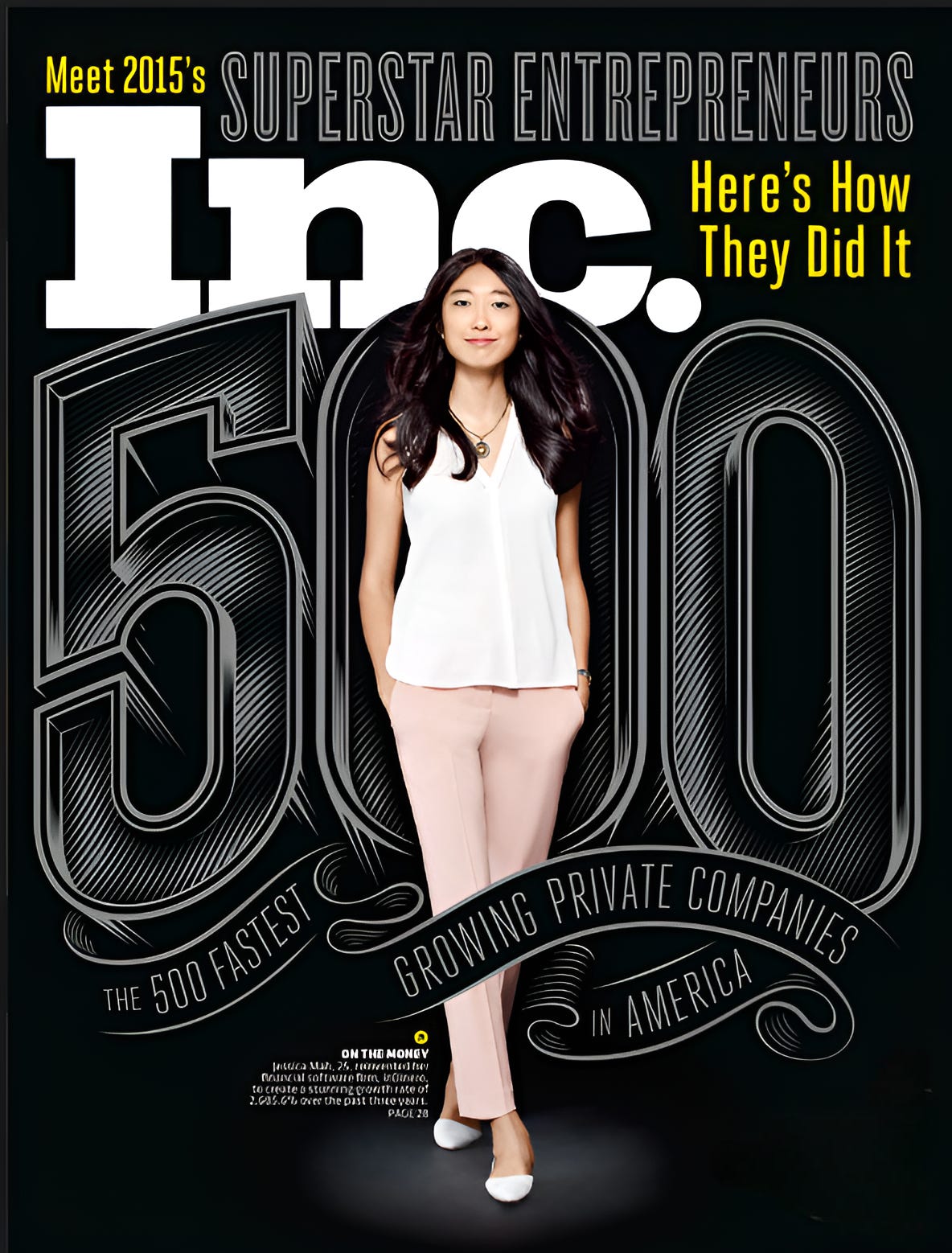
The brutal, solitary work paid off. From the ashes of the 2011 reboot, inDinero rebounded with a vengeance. The painful pivot to a high-touch service model found its footing, and over the next several years, the company began to scale with breathtaking speed. The machinery of a mature startup began to turn: funding rounds were raised, crossing the ten-million-dollar mark; offices opened in San Francisco and New York, servers hummed with the financial data of a growing empire. The headcount swelled to over two hundred employees worldwide. By 2015, the company had a nine-figure valuation and a place on the coveted Inc. 500 list. That year, her face, young and confident at twenty-five, stared out from the cover of Inc. magazine, the very picture of a founder who had wrestled failure to the ground and won.
But inside the gleaming machine, a different kind of friction was building. The external markers of success, the awards, the valuation and the ever-expanding team were a golden cage. The role of founder had morphed into the role of CEO, and the shift was corrosive. The final years of her tenure, she would later say, were “really miserable for me.” The work was no longer about creation; it was about maintenance. The daily reality was an endless stream of “constant employee problems and customer problems,” human complexities and operational fires that had little to do with the initial spark of invention.
Her passion, she discovered in this period of profound success, was for “building the business at a small scale,” for the raw, zero-to-one sprint. It was not for the meticulous, patient work of guiding a large organization to its next decimal point of growth. The company, now a complex global entity, needed a different kind of leader, someone with a “deeper operational bench” who thrived on the very challenges she found draining. She had built a company so successful that it had outgrown its own creator. The victory was complete, and it had created a job she no longer wanted, a life that no longer fit. The public triumph was masking a private, gnawing truth: she was the architect of her own unhappiness.

Becoming a Startup Factory
The slow burn of her discontent, the quiet misery of running a company she no longer loved, met its accelerant in the spring of 2020. As the world shut down, the machinery of global commerce seized up, and with it, a cascade of her clients. The financial dashboards she obsessively watched began to bleed, the numbers “flashing red” day after day. The stress was immense, a constant, low-grade panic that finally culminated one night in a raw, animal sound, a “five-minute, primal cry” that was the pure expression of a system overloaded. Her boyfriend found her, offering the simple, grounding assurance that would become a mantra: I believe in you. But belief alone could not hold back the tide.
Then, in April of 2021, the abstract pressures of business were eclipsed by a sudden, shattering personal tragedy. Her fiancé died. The loss was an explosion that sent shrapnel through every corner of her life. In the disorienting aftermath, a lifeline appeared. An offer came from one friend, then another, then a small constellation of them. I had so many friends to just offer to place for me to crash, she would recall.
She rotated between their homes, a nomad in her own city, living out of a bag. The act of receiving that kindness was its own kind of education. In the deepest trough of her grief, she was also discovering the true architecture of her relationships, the people who formed the load-bearing walls of her life. The experience, she would later say, was “really beautiful for enhancing my relationships.” The two pressures, personal and professional, the slow grinding away of her spirit by a job she had outgrown and the sharp, definitive blow of grief, had fused into a single, undeniable force. That summer, surrounded by the quiet support of the friends who had taken her in, she made the decision. She would step down as CEO.
Freed from the relentless operational demands of the company she had spent a decade building, the question of what came next hung in the quiet air of early 2022. For a founder whose identity had been fused so completely with her creation, the departure from inDinero could have been an ending. But a parallel track had already been laid, a secret experiment that was quietly proving out a new theory of work and life. While still navigating the final, miserable years as CEO, she had started another company, a legal tech venture, almost as a side project. It was a chance to test a different model.
The results were explosive. In just thirty-six months, she and a partner grew it to mid-eight-figure sales, earning it a valuation north of one hundred million dollars. What was significant was that she had done so while retaining ninety-five percent of the business. The numbers weren't just impressive; they were a revelation, a proof point that shattered the myth of the all-consuming, singular founder journey. Looking at the success of this second venture, the realization landed with the force of an epiphany. Oh, wow. I could do that. Like I could do this again and faster and better. The misery of the CEO role wasn't an inevitable price of ambition; it was a feature of a specific, grueling model she no longer had to follow.

Manufacturing Startups
This insight became the blueprint for her next act: Mahway, a venture builder she founded that year. It was not a venture fund that wrote checks from a distance, but a foundry for creating companies from the ground up. The new playbook was elegant in its simplicity. The key, she realized, was to “partner with other people who were experts in a domain.” Her role was no longer to be the long-haul operator, but the catalyst. She would “help form the company get it going get it funded... and then... pray that it be okay later on.” It was a process she had a “knack for,” a way to harness her talent for the zero-to-one sprint without chaining herself to the slow, grinding marathon of scaling. This was not a retreat from the arena but a redesign of it. She was no longer just a founder, but a creator of startups, liberated to build on her own terms, finally aligning her insatiable drive with a philosophy that work, above all else, “has to be fun.”
Today, Jess Mah operates from a place of earned and radical authenticity. The boundaries that once separated work from life have been dissolved, not by the pressures of a 24/7 startup culture, but by a conscious choice. Her gaze is now fixed on a horizon that stretches far beyond the next fiscal quarter. She plans her life with the assumption that she will live past one hundred, a conviction that reorders priorities and elongates timelines, making decisions about career and family part of a much grander, more patient design. It is the ultimate expression of her journey: a life being built not according to a received script, but one that is being constantly and courageously rewritten from scratch.