


Jack Altman is the Founder & Managing Partner at Alt Capital, a venture capital firm backing early-stage startups. He is also the co-founder and Chairman of Lattice, the people management platform used by thousands of companies globally. Under his leadership as CEO, Lattice grew from a YC-backed startup to a $3 billion valuation, raising over $300 million from investors including Tiger Global, Andreessen Horowitz, and Thrive Capital.
Before founding Lattice in 2015, Altman was an early-stage angel investor in companies like Opendoor, Instacart, Gusto, and Patreon. He also co-founded Hydrazine Capital, an investment firm, with his brother Sam Altman.

Before the world was networked and flickering in every palm, there was a suburb in St. Louis that Jack Altman remembers as a “pretty idyllic, very bubbled, encapsulated thing.” It was the 1990s, a time still blessedly analog. Summers as a kid were all about outdoor fun, from laser tag on well-kept lawns to biking around without a care. He lived right behind the school, and a “cutout in the backfences” served as a private portal, a hole that led straight into the parking lot.
He was one of four siblings in a loving family, a competitive clan anchored by a dermatologist mother and a real-estate broker father. The home was a place of constant affirmation, a consistent message that “you’re awesome, you’re great, you can do anything.” Although this supportive praise was common for his “participation trophy generation,” to Jack it felt deeply personal. He held the foundational belief that his parents were his entire world, and their love was the source of his capability. This support was balanced by a playful, intellectual friction among his two older brothers. They would compete over board games, over who could solve math problems faster at the dinner table. It was never the type of competition that was negative; it was a positive, ambitious way of being, the simple desire that if they were going to play a game, he would like to win the game.
His older brother Sam, set a certain tone in the house… An unspoken example that school was important and to be taken seriously. His parents never pushed, never talked about college until it was time to apply, but that didn’t matter. This precedent set by an older sibling, a quiet pressure, was more powerful than any parental directive.
This upbringing produced a young man of high contrast. He was on the water polo team, a sport he was “reasonably good at,” but he was also in the Rocketry Club, absorbed in science competitions. He was, by his own account, very social but also nerdy, a kid who loved school and had a great group of friends.
In high school, around the mid-2000s, a “big poker craze” swept through the basements of Missouri, sparked by a Tennessee accountant named Chris Moneymaker who had won the World Series of Poker and turned the game into a national obsession. For Jack and his friends, it was an all-consuming ritual. After watching matches on ESPN, they would gather for games where the buy-in was ten dollars, a sum that felt substantial enough to sting. It was a world of calculated risk and gut feelings, played out under the dim lights of suburban homes, a departure from the sunlit afternoons of his earlier youth.
The Ivy League Hedge
When it was time for college, he simply applied. He had good enough grades, so he sent applications to a handful of schools, maybe eight in total. He ended up at Princeton because he visited and it “looked great,” a decision that he admits “kind of just happened.” It was here, on the campus of an Ivy League institution, that he first met his future wife, Julia. They were introduced their freshman year, in 2007, and for the next four years, they were simply friends, a consistent presence in each other's lives as they navigated college.
When it came time to choose a major, he opted for what he thought was the path of greatest potential. He chose Economics, not because of a burning passion for monetary policy, but because it was a “super popular major at Princeton” with well-known professors. He enjoyed the intro classes well enough, but the decision was “not an overly thoughtful choice.” It was, like his first job would be, one of the “high optionality choices” he made as a result of not having definite plans yet. He was simply moving toward things that seemed interesting enough and kept the most doors open for a future he had not yet begun to imagine. He was accumulating options, collecting keys to doors he hadn't yet found.
Walking Away from a Wall Street Bonus
That path of high optionality led, as it so often does for Princeton graduates, directly to New York. After graduation, he moved to the city and began his career as a financial analyst at Gleacher & Company. It was the next logical step on a treadmill he hadn’t realized he was on. His relationship with Julia, had turned romantic, but now it stretched across the country, a bond maintained through phone calls and cross-country visits. He was doing what was expected, following a script written by decades of young men before him. For a time, he found parts of it intellectually stimulating. It was interesting to learn about companies, to think about mergers, to get a glimpse into the machinery of capital. But he was far from the engine room. An analyst is “on an interesting plot of land, but you’re doing the worst work on the worst parts.”
The work was a labored grind, a series of tasks that felt distant from any meaningful outcome. And then, one day, he had a moment of startling clarity. He met with senior people in the industry, men who had reached the apex of the profession he was just beginning. He saw them, saw their lives, and felt a deep, instinctual rejection. A single thought crystallized in his mind, sharp and undeniable: I don't want that life. He realized with a sinking feeling that he was “fighting super hard to climb this hill that I don't want to be at the top of.” The money, which had been a vague, abstract motivator, was no longer enough. On the pro side of the ledger was a high likelihood of a good amount of money; on the con side was a long and growing list of everything else.
This realization became a turning point, an axiom he would carry with him for the rest of his life. The moment you realize you’re playing a game you don’t want to win, you have to get out of the game instantly. He acted on this newfound principle with a conviction that startled even himself. Two months before his first-year bonus was due, he quit. Missing out on a sum that felt like a “huge amount of money” to his 22-year-old self. He walked away from the prescribed path, leaving the security of the well-trodden road for the uncertainty of an open field. He didn’t know what game he wanted to play yet, but he knew, with absolute certainty, that it wasn’t this one.
Leaving His Own VC Firm
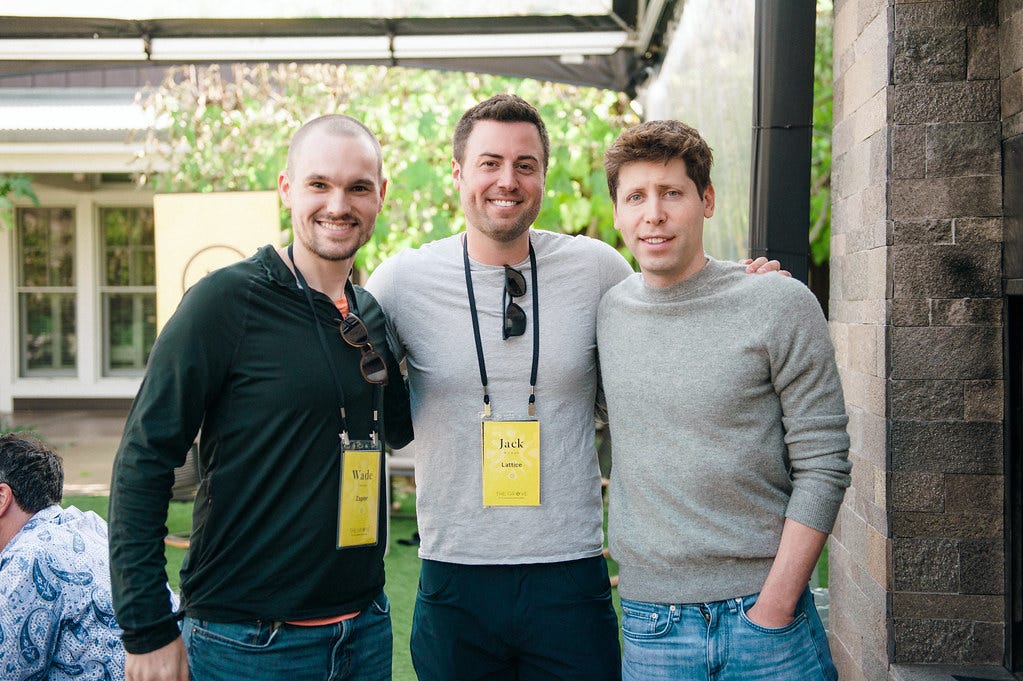
The escape from Wall Street led him west, not with a destination in mind, but with a direction. In 2012, he joined his brother Sam to co-found Hydrazine Capital, a small, seed-stage venture firm. He had traded the rigid hierarchy of banking for the freewheeling world of tech startups. He was in the room, listening to founders pitch their dreams, but he felt a profound sense of dissonance. With only a single year of banking behind him, he knew nothing about tech, nothing about building a company. He felt “so silly sitting here with a second time founder.” He was “in no place to be sharing advice,” not equipped to help in any meaningful way. It was a “light baby version” of the real work, and he knew it. This wasn’t a game he wanted to win either; it was just a different kind of sideline. He needed to get operating experience.
The opportunity arrived through the fund itself. Hydrazine led a seed investment in a social-commerce startup called Teespring, a company that had come through the now-famous accelerator Y Combinator. There was a point of connection, the founder also grew up in St. Louis, but the draw was the energy, the feeling that something real was happening there. He moved to California, joining Teespring as employee #10. His first taste of San Francisco was disorienting; he stayed in a hotel in the Tenderloin… It did not feel good. But the company felt different. He was no longer an observer; he was a builder, immersed in the beautiful chaos of a startup hitting escape velocity.
At Teespring, he learned by doing, but his most indelible lesson came from watching the company’s meteoric rise and subsequent struggle. Much of its distribution came from Facebook so when the platform’s algorithm changed, the ground shifted beneath them. It was a visceral education in the concept of “platform risk,” the danger of building your house on someone else’s land. The experience left a scar, but also a conviction. He became attracted to the resilience of B2B, a model where you have to “earn each customer on your own and nobody can take that away from you once you have that machine.” He had left New York seeking a different kind of work; in the trenches of a Silicon Valley startup, he had found it. He was no longer just collecting options; he was forging a point of view.
Founding a a $3B Company
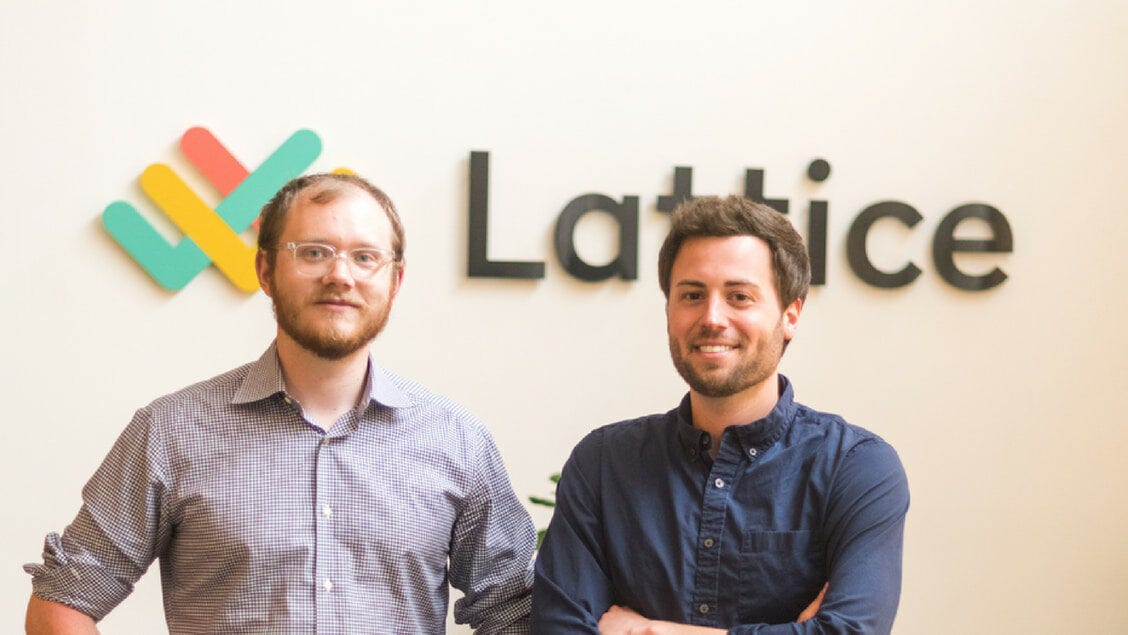
Jack was twenty-six in the fall of 2015 when he and Eric Koslow, Teespring’s former lead engineer, decided to build something new. He knew the problem intimately, had felt its friction in the daily life of a fast-growing company. Employee management was “unnatural, difficult, and it needs structure.” He saw the challenge, but knowing the problem and knowing the solution were two different things. This distinction would define the next several years of his life.
The early days of their new company, Lattice, were a particular kind of painful. It was not the straightforward rejection of “complete crickets,” the silence that tells a founder to move on. Instead, it was a more seductive and maddening “head fake.” They would have conversations, and people would show consistent interest. So they would try what he and Koslow had built, and then… nothing. The initial enthusiasm would dissipate, leaving behind a trail of abandoned trials and unanswered emails. This cycle became a dangerous temptation, a chase to add one more feature, to make one more change, hoping that this time they would stick with it. It was never going to be enough.
In those first years, Jack was hungry for any approval, a hunger he now recognizes as both a strength and a weakness for any founder. It gives you a fire in your belly, but it can also make you “chase the wrong stuff,” to seek validation from the wrong people. The breakthrough came not from a technical insight, but a human one. He realized he had to get past the cordial, superficial relationship of a vendor and a potential client. He had to get to a place where he was friends with his users, a place where they would stop BSing him and deliver the hard news. Only then could he get to the “ground truth,” the real answers about what keeps people up at night, what they’re stressed about, what they need to get promoted.
This all-consuming professional quest was mirrored by a deepening personal commitment. He and Julia were now engaged, their relationship still spanning the breadth of the country. He knew what starting a company demanded. Before diving in completely, he took her out on a lake and laid it bare. He was about to become worse as a partner, he told her. If he was going to do this, it was going to come with a dip. She was, he recalls, “unbelievably supportive.” She understood. In hindsight, the long distance was a strange blessing, a structure that made the intense focus of the early years possible.
Hypergrowth & Rasing Hundreds of Millions
After the lean years of searching, Lattice found its rhythm. Launching from Y Combinator’s Winter 2016 batch, the company began to move with a new momentum, leaving the painful search for product-market fit behind for the exhilarating challenge of scaling. The following years were a blur of accelerating growth, marked by the steady drumbeat of venture capital rounds that were themselves a kind of public accounting. A Series D in 2020, then a Series E in 2021 that pushed the company’s valuation to a billion dollars. By the start of 2022, after a $175 million Series F, Lattice was valued at three billion. The team grew from a handful of people in a room to an organization of nearly 500.
For Jack the nature of the work changed completely. He was no longer just building a product; he was building an organization, a complex human system. His education came not from business books, but from the act of “doing.” He learned his most profound lessons on leadership when the company grew large enough to afford what he calls one of the “big hacks” of building a business: you get to hire these “really awesome, fancy experienced execs.” He was now the manager of people who had been in the industry for longer than he had been an adult. It was a humbling and powerful dynamic.
This intense, practical education became the foundation of his leadership philosophy. The ideas weren't theoretical; they were forged in the daily work of trying to build a healthy, effective culture amidst hypergrowth. He and his team codified these lessons into a book, People Strategy, a title that was both a mission statement and a manual. It became a Wall Street Journal bestseller, a surprising outcome that nonetheless signaled how deeply their message was resonating. In 2019, Forbes had named him to its “30 Under 30” list. He was now a CEO in full, no longer the young man searching for the right hill to climb, but a leader who had reached a significant summit, one with a commanding view of the landscape he had helped to shape. The question was no longer how to get to the top, but what to do once you were there.
Stepping Down as CEO
In the final days of 2023, after nearly a decade at the helm of Lattice, Jack Altman announced he would transition from CEO to Executive Chairman. He had reached the top of the hill he had chosen so carefully after fleeing finance, and found that what he wanted was not a wider kingdom, but a different way of living. He had spent his twenties and early thirties in the “fullest of the grind,” and now he wanted the unscripted time, the simple “time and headspace to be with my kids and to laugh with my friends.”
The stepping away was followed by a quiet recalibration, a month that served less as a vacation and more as an archeological dig into a self that had been buried under years of board decks and product roadmaps. In this newfound stillness, the “big hobby person” from his childhood re-emerged. He went deep down the “espresso rabbit hole,” a meticulous, daily ritual of weighing and tamping, fascinated by the precise mechanics of turning a dark roast from Honduras into a perfect cup of coffee. He got into vinyl records, drawn to the tangible engineering of the medium, the way a physical groove could be translated into the immersive warmth of sound. This was a return to the analog, to the simple, absorbing pleasure of figuring something out for its own sake, a pleasure that had been his earliest and most natural impulse.
This interlude was the necessary preamble to his next act. In early 2024, he founded Alt Capital, a venture firm that was not just a new enterprise, but the physical manifestation of a new life philosophy. He was done playing finite games. He designed this firm to be an “infinite game,” an endeavor built not for a quick exit, but for sustained engagement, something he could still be doing, and loving, when he was sixty-five or seventy. This principle became his new North Star, shaping every decision. The goal was no longer to scale at all costs, but to build something that could last a lifetime.
He found a surprising freedom in this new role, an embrace of the very thing a CEO is paid to eliminate: a lack of control. He now believes that being a great CEO often requires a “maniacal attention to every detail,” a personality trait he feels he had to compensate for. As an investor, he is liberated from that need, able to guide and support without commanding. His focus has turned to finding and backing a new generation of founders, young people who possess a quiet wisdom beyond their years. He searches for the ones who have a deep respect for experience but are not imprisoned by it, who listen intently but are ultimately guided by their own “internal North Star.”
Day-Trading Period & Applebee's Stock Prophecy
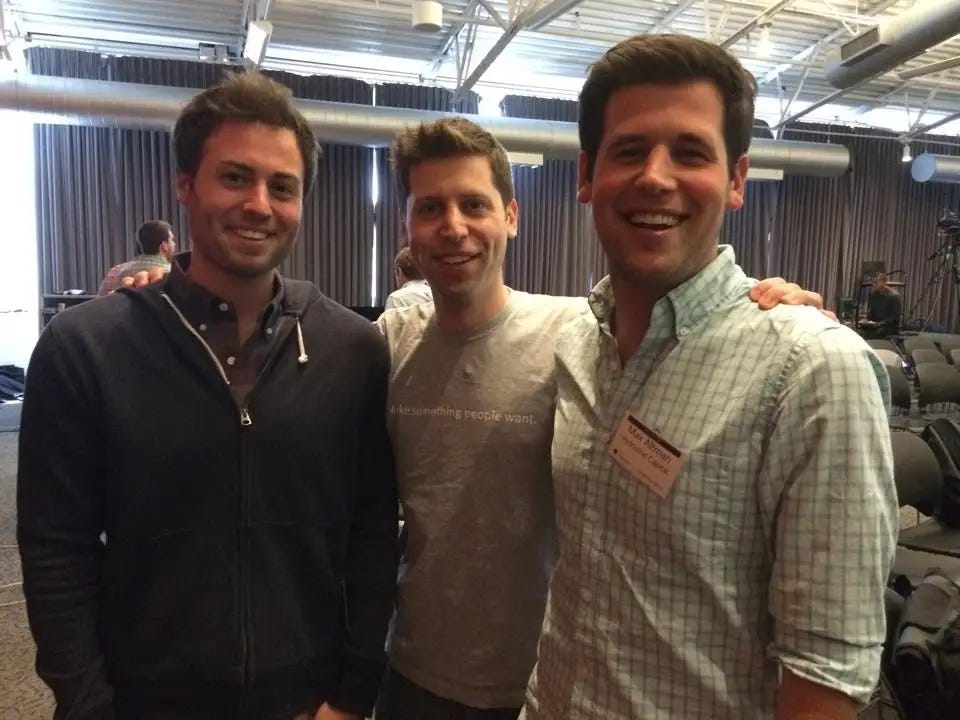
This professional evolution is anchored by a deeply settled personal life. His journey is now less about what he is building and more about who he is becoming. He speaks of it all with a disarming frankness, weaving the high-level strategy with the humbling, human details. He can laugh now at the “degenerate period” in his twenties when he and his brothers lived together in San Francisco, convinced they could outsmart the market by day-trading options based on a logic as sound as a “farmer’s almanac.” The memory sits comfortably alongside the story of his grandmother’s prescient gift: paper stock certificates for Apple to his brother Sam, the computer kid, and for him, the chubby one who liked to eat, certificates for Applebee’s. The rich get richer, he can now say with a smile. The stories are not distractions; they are the point. They are the texture of a life lived, not just curated.