


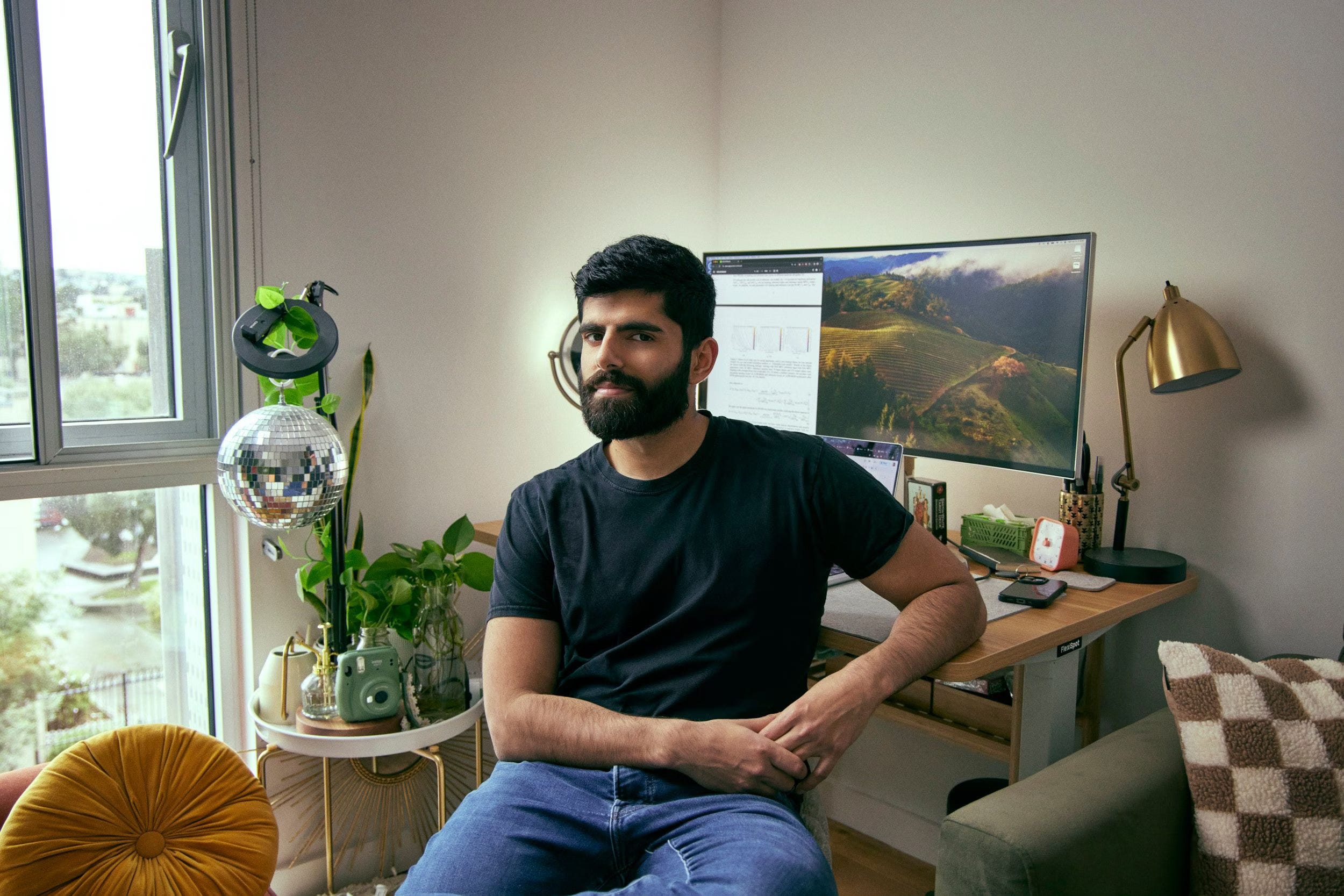
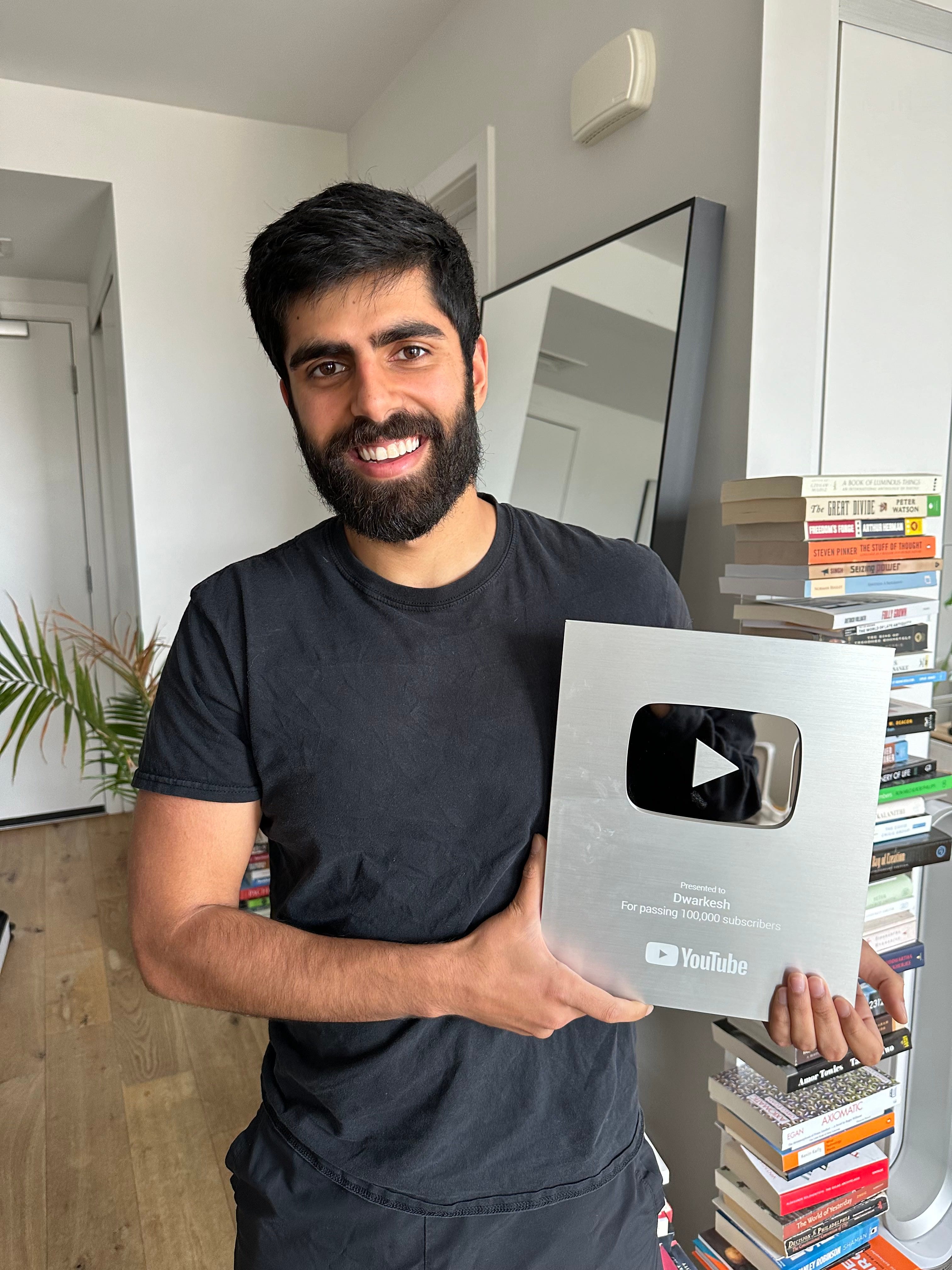
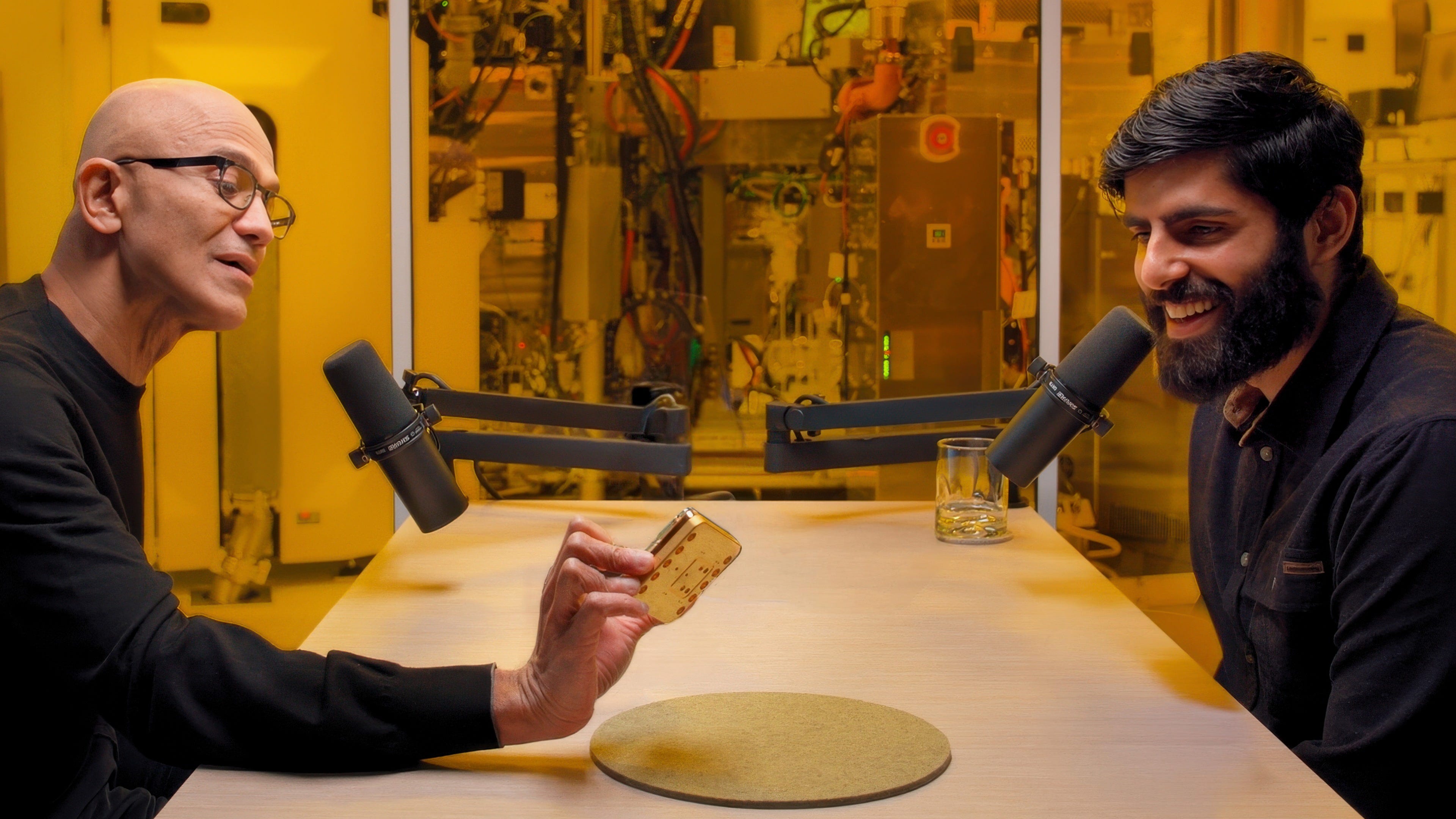
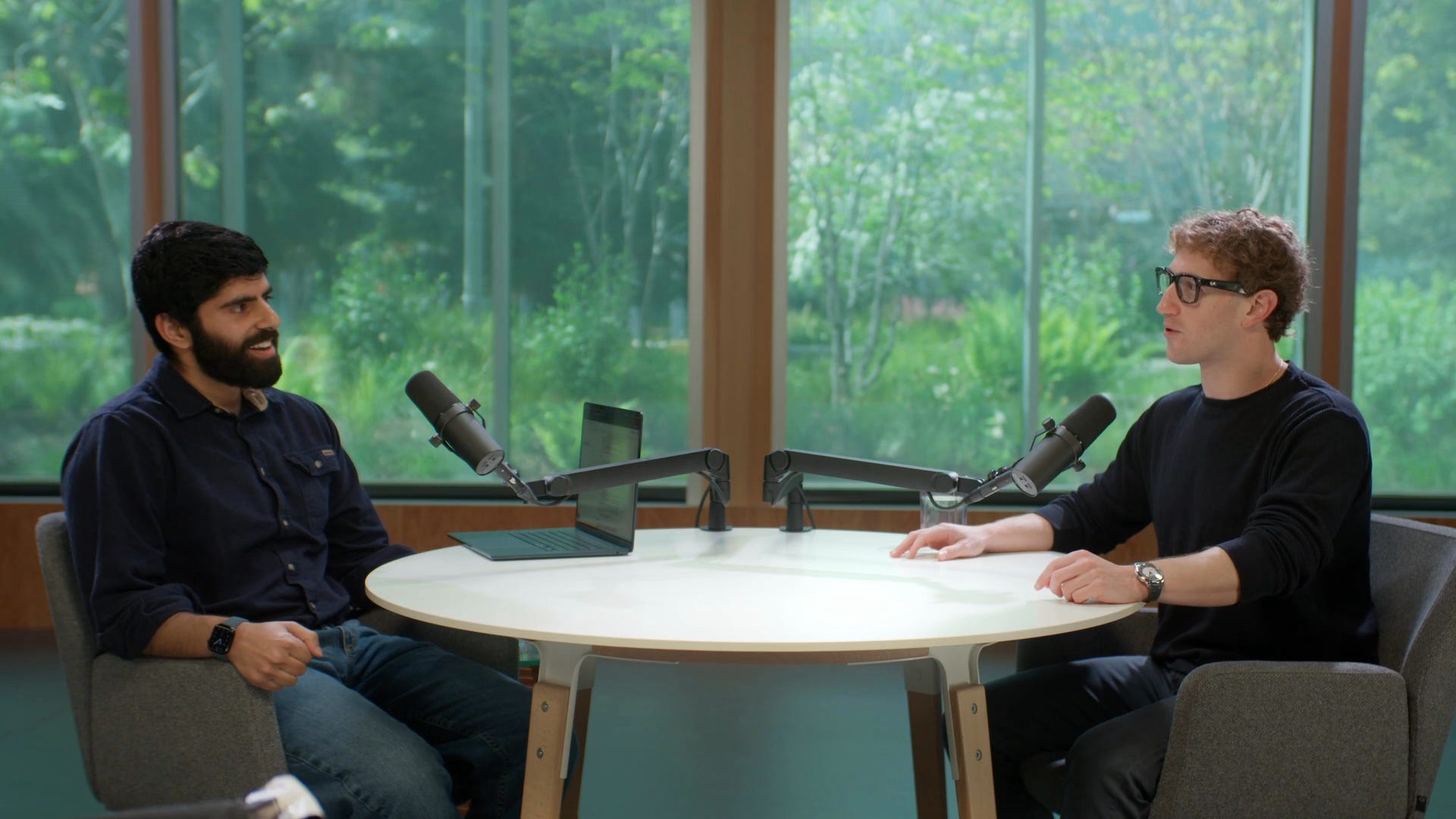
Dwarkesh Patel, a 23-year-old computer science graduate from UT Austin, has quickly become a trailblazing podcaster. Through his podcast, launched from his dorm room, he has conducted in-depth interviews with Marc Andreessen, Satya Nadella, Ilya Sutskever, Patrick Collison and more. His work has earned acclaim from figures like Jeff Bezos, who’ve praised the podcast, the show has nearly one million subscribers on YouTube. Known for rigorous preparation that often involves reading academic papers and consulting experts for weeks, Dwarkesh has also attracted high-profile sponsors including Jane Street and Google, cementing his reputation at the intersection of AI, technology, and economics.
A Mind of Numbers, a Body of Bruises
Dwarkesh Patel’s story begins in the heat and hum of Barodhra, a city in the Indian state of Gujarat, where the dust of the streets mingled with the scent of spices and exhaust. He was a boy of the late 1990s, the son of a doctor who ran a small clinic and a mother who had studied accounting and education but now managed the home. His memories from this time, before he left at age eight or nine, flicker like frames from an old film reel: distinct, potent, and hinting at the man he would become. There was a duality to his childhood, a tension between a mind being sharpened to a fine point and a body that seemed to court chaos at every turn.
His mother, seeing a spark of something in him, enrolled him in UCMass, a program that was a “very Indian thing,” designed to forge a human calculator. The method was intense, a relentless drilling that taught him to memorize and visualize the beads of an abacus, to see the clicks and slides inside his own mind. He learned to summon this phantom tool to perform staggering feats of mental math, to add columns of twenty-four-digit numbers or multiply figures that would send most adults reaching for a machine. He would go to the tutoring sessions week after week, a small boy tasked with mastering an ancient computational art, his mind a silent, whirring engine of beads and wires.
Yet, outside the controlled world of numbers, he was a “rowdy kid.” His knees were a perpetual cartography of scrapes and bruises, a testament to a childhood lived at a full, reckless tilt. He was constantly getting into scrapes big and small, a magnet for minor disasters. Stitches from a fall against a table, bruises from an unseen obstacle—every week seemed to bring a fresh injury, a new testament to his uncontainable energy. It was a pattern of breakage and mending that deeply unsettled his parents. Before the family was set to leave India, they decided something had to be done to fix their son’s chaotic orbit. They summoned a pundit, a Hindu saint, to their home to diagnose the boy’s energy, which, it was determined, was thoroughly “fucked up.” The prescription was not medical but metaphysical: a pilgrimage to the sacred river Ganga for a cleansing bath in a concoction of cow milk and cow dung. He remembers the moment, not with opposition, but with a child’s simple acceptance. He would later recall the surprising softness of the dung, a strange, earthy baptism meant to correct his cosmic imbalance.
His world was circumscribed by these rituals, both intellectual and spiritual. There were the weekly trips with his mother and grandmother to the Haveli, the temple dedicated to Krishna, where they would pray before buying little sweets to “gobble them up” on the way home. His father, for his part, was a devotee of Sai Baba, and the family made pilgrimages to Shirdi, pressing through the immense, shoulder-to-shoulder crowds of other believers. Life was also grounded in the daily errands, the walks to the equivalent of a farmer’s market to buy produce, the colors and sounds of the stalls a sensory overload. His favorite food, then and now, was sev puri from a street vendor. He understood, even then, the central paradox of street food: that the best-tasting morsels were made by the people most likely to get you sick, their hands working quickly with “cold water” and unadorned surfaces. It was a risk you took for a moment of sublime flavor. This was his life: a blend of devotion, calculation, and a constant, low-grade danger that was as much a part of the landscape as the stray dogs and the afternoon heat. It was a world he was about to leave behind, a foundation of memory and sensation from which everything else would grow.
The world he knew—a tapestry of crowded temples, street vendors, and the soft texture of ritual dung—dissolved into the sterile air of international travel. At eight or nine years old, he was unmoored, cast into a migratory existence dictated by the trajectory of his father’s medical career. The first stop was a six-month pause in Canada, a placid, indistinct waiting room where his father searched for a residency in the United States. Then, the pin dropped on the map, landing on a place that could not have been more alien to a boy from Gujarat. His first introduction to the West was not a coastal metropolis shimmering with promise, but Bismarck, North Dakota, a city on the plains that, the year before his arrival, had been entombed under a record one hundred inches of snow. The cultural shock was absolute, a visceral shift from the oppressive humidity of home to a cold so sharp it felt like an assault.
In Bismarck, circa 2008, he became a “conspicuously weird kid.” It was a reputation built from a collage of differences, some subtle, some stark. There was the thick accent that clung to his words, a remnant of another life that immediately set him apart. His English was still catching up, lagging behind the school’s curriculum and landing him in remedial classes where he sat, the boy who could mentally multiply four-digit numbers, struggling to conjugate verbs. While his math was “amazing,” a silent, portable skill that transcended language, his speech marked him as an outsider. He didn’t have many friends. He remembers being bullied, though the memories are hazy, less a collection of specific cruelties and more a general atmosphere of not belonging. He threw himself into games of football during recess, a frantic attempt to find a common language in the rough and tumble of the schoolyard.
The cafeteria became another theater of his otherness. He was a vegetarian, a practice rooted not in a modern ethical choice but in the ancient faith of his Hindu upbringing. In San Francisco a decade later, this would be a commonplace preference, but in North Dakota in 2008, it was a strange and inconvenient fact. The school lunch line offered few, if any, options for him. So his mother began packing his lunches: containers of Indian food, fragrant with spices that were entirely foreign to the unaccustomed noses of his classmates. He knew the people there were “incredibly nice,” not backward as the coastal stereotypes might suggest, but they were also simply not “super used to” a boy eating dal and rice while they had sloppy joes. The packed lunch was a package of love from home that, in the harsh light of the school day, became another wall between him and everyone else.
This state of perpetual motion became his new normal. The family’s life was a series of three-year stints and single-year interludes, a restless journey across the American interior. After three years in Bismarck, from the ages of nine to twelve, they moved to West Virginia. He was there from twelve to fifteen, a crucial, awkward span of early adolescence spent in the hills of Appalachia. Here, he found a more structured social outlet, joining the Boy Scouts, learning to tie knots and build fires, slowly decoding the rites of American boyhood. The itinerant life continued: a single year in Maryland, followed by two more in the stark, flat landscape of San Angelo, West Texas, for the end of his high school years. With each move, each new school and new set of faces, he became “slowly and more socially adjusted.” The sharp edges of the conspicuously weird kid from Bismarck were gradually worn down, smoothed by the constant friction of having to start over, again and again.
It was in the humid hallways of a Maryland high school, and later under the vast, indifferent sky of West Texas, that he found a new kind of discipline, one conducted not with an abacus but with words. He got “super into debate,” dedicating himself to the formal combat of Lincoln-Douglas and the high-wire act of Extemporaneous Speaking, where he had thirty minutes to synthesize a coherent argument from a chaotic stream of current events and deliver it in a seven-minute speech. The activity thrilled him. It was a craft of structure and persuasion, a way to order the world through logic and rhetoric. He spent his weekends at tournaments, living in a bubble of prep rooms, evidence binders, and the clipped, urgent cadence of competitive speech.
This new passion, however, was a source of profound anxiety at home. His parents were “super against” it. From their vantage point, built on the bedrock of immigrant experience, life was a treacherous landscape where the primary goal was “loss minimization.” Their world, and the extended network of their friends and family, was populated by cautionary tales, “horror stories” of children who had stumbled off the prescribed path and fallen into addiction or ruin. These stories, likely “more embellished” in the retelling within the close-knit Indian community, served as a constant, low-humming warning. The parental obligation was absolute; if the kid was “fucked up,” the responsibility to care for him was lifelong. Their dream for their son was not one of self-discovery but of unassailable security. Even back in North Dakota, the refrain had begun: “look, you got to become a radiologist.” It was a profession of certainty and respect, a fortress of prosperity. His weekend debate tournaments felt to them like a dangerous indulgence, time that should be spent on something “more productive or something more useful, something more STEMI.”
He understood their perspective, the logic of their fear. But he continued, unknowingly forging the very tools that would one day define his life. In retrospect, the “obvious transfer” between the skills of debate and his eventual career would become clear, an “interesting lesson about how hard it is to plan life.” But at the time, he was simply a teenager pursuing an interest against the grain of his parents’ hopes.
The Million-Dollar Article
As high school drew to a close in San Angelo, he was still pointed toward their vision, preparing to major in something like biotechnology as a runway for pre-med. The decision to deviate was “very last minute,” a sudden swerve precipitated by a single piece of information. In 2017, he read a New York Times article that pulled back the curtain on the burgeoning world of artificial intelligence. It spoke of a new class of researcher, digital architects who were commanding salaries that seemed to belong to another reality. The figure that lodged in his mind was a million dollars a year. The number was a siren call, a powerful counter-narrative to the stable future his parents had mapped out. The calculation was swift and decisive. “AI sounds cool,” he thought. “Computer science is maybe as lucrative as becoming a doctor.”
It was a pragmatic pivot, a different path to a similar destination of financial viability, but one that felt like his own. He applied to colleges, but not the “super prestigious universities” that were the usual prize in his community. He was accepted into the computer science program at the University of Texas at Austin, a choice sealed by the sheer good sense of in-state tuition. The path to becoming a doctor, once so clearly laid before him, vanished. He was headed to Austin, to study the code that promised a new kind of fortune, a future he had chosen from the glow of a screen in his bedroom in West Texas.
He arrived in Austin with a pragmatic mission, a computer science major chasing the promise of a million-dollar salary he’d read about in the Times. Yet, funnily enough, the very topic that had rerouted his life—Artificial Intelligence—remained a distant concept. He was simply another student submerged in the foundational coursework of his degree, learning “CS 101, whatever,” the practical scaffolding of a lucrative career. But his true education was happening elsewhere, in the quiet hours away from the lecture hall. He was reading voraciously, consuming books that cracked open new ways of seeing the world. One in particular had a profound impact: David Deutsch’s The Beginning of Infinity, a dense and exhilarating exploration of epistemology and human potential that rewired his thinking.
This burgeoning intellectual life was largely a solitary pursuit. He felt as if there was nobody else at the university who was “also into it that much.” He found a rare exception in Daniel Bonevac, a philosophy professor with a generous spirit. After nearly every class, the two would remain, the professor kind enough to spend an hour just “chatting with me personally about current affairs and history, philosophy, etc.” These conversations were an anchor in a sea of undergraduate indifference, a space where his sprawling curiosity was met with serious engagement. To find a broader community, he turned to the digital world, creating a Twitter account sometime in his freshman or sophomore year, a tentative step into the online “milieu” where ideas moved at the speed of light.
At home, in the shared space of his college apartment, another catalyst appeared. His roommate, Andrew Young, introduced him to the essays of Paul Graham. They would “debate and discuss them all the time,” internalizing the central mantra of the startup world: you have to “make something people want.” This injunction sparked a flurry of entrepreneurial activity, a series of earnest and clumsy attempts to will a successful venture into existence. The ideas were often more amusing in hindsight than they were viable. There was Andrew’s project, Tate’s Crates, a plan to pick up furniture that people were throwing away during moves—a free service for them, a potential inventory for him to resell. Dwarkesh remembers one long weekend spent hauling an old woman’s unwanted belongings to a storage warehouse, the physical labor a stark contrast to their abstract ambitions.
His own grand idea was a website called Popper Play. It was an invention born directly from his deep dive into philosophy, heavily influenced by Karl Popper’s ideas of conjecture and refutation, as filtered through his reading of Deutsch. He envisioned it as a forum where users would pose questions, then offer competing conjectures and rebuttals, a grand digital salon where “science will happen.” It was a beautiful, intricate concept. When people rightly pointed out, “hey, you know, Quora exists, right?” he would insist, “no, no, this is a totally different idea.” He was convinced of its unique genius. He emailed the figures he admired on Twitter, people in the “David Deutsch world,” trying to entice them onto his platform. None of them bit. The project, like so many first ventures, faded into obscurity. Looking back on this period, on the naive blueprint for Popper Play, he would see it all as deeply “cringe,” the work of a mind not yet seasoned by the world. It was a time of grand, flawed ideas, but the impulse to create, to synthesize, and to engage was the critical, unrefined ore from which his future would be smelted.
Apprenticeship with Bryan Caplan
It was from the ashes of these early, flawed ventures that a new kind of project emerged, one born not from an abstract desire to build a platform but from a direct engagement with a specific mind. During his freshman year, he had read The Case Against Education, a book by the George Mason University economist Bryan Caplan. The ideas resonated, but more than that, the author himself became a figure of immense intellectual stature in his mind. The thought of speaking to him was intoxicating, an impulse that felt both audacious and necessary. He was, by his own admission, completely “starstruck.” To him, preparing to interview Bryan Caplan was like “talking to Obama or something,” a summit so high that the only way to approach it was with an almost fanatical level of preparation.
So he began to work. This was not the cool, detached research of a seasoned journalist but the frantic, obsessive cramming of an acolyte. He dove into Caplan’s work, dissecting arguments, tracing citations, and formulating questions with the desperate hope that they would be worthy of his subject’s time. He felt an acute awareness of his own intellectual immaturity. Looking back, he would find it “sort of unbearable to have a conversation with myself at 19,” recognizing that his ideas about startups, his life philosophy, his entire worldview, were “super naive.” But in that naivete lay a powerful engine: a profound sense of inadequacy that he could only counter with sheer, relentless effort. He had to prove he belonged in the room.
The interview happened, a conversation conducted over a wire, connecting a teenager in his college apartment to a tenured professor hundreds of miles away. It was a success, at least enough of one to embolden him. He asked Caplan for an introduction to his famous colleague, the economist and blogger Tyler Cowen. The connection was made. Years later, he would ask Cowen why he’d agreed to speak with a completely unknown student podcaster. Cowen’s answer was telling. He had been writing a book about identifying talent, he explained, and he thought the interview would be an “interesting way to get a data point”—a low-risk experiment on a young person who came with a referral from a trusted source. Dwarkesh was not a peer; he was a piece of research.
But the connection with Caplan deepened into something far more significant than a one-off interview or a professional contact. The COVID-19 pandemic descended, emptying campuses and disrupting the rhythms of the world. During those strange, suspended summers, Caplan began spending long stretches of time in Austin. An extraordinary mentorship began to unfold, not in an office or a classroom, but over casual lunches. They met “like every day for months on end.” It was an informal, intensive apprenticeship. Dwarkesh, still brimming with the unformed and often clumsy questions of a young man just beginning to build a mental model of the world, found in Caplan an incredibly patient teacher. He considers it “really nice of him to tolerate me,” to sit there day after day, fielding the kinds of “very naive questions” he had surely “heard a million times.” Caplan’s generosity in getting him “up to context on so many different topics” was a formative, and entirely unexpected, gift.
He was being drawn into an intellectual circle that operated on a different frequency. He recalls Robin Hanson, another George Mason economist, visiting Austin and, upon meeting a finance professor, immediately posing a characteristically blunt challenge: “Finance is 9% of GDP. Is that too high or too low?” The professor was flustered, but Hanson “wouldn’t let him go.” This was the world he was now brushing up against, a world of relentless, first-principles inquiry. He was still a student, still just doing an interview “once a month or something.” But these conversations, and especially the quiet, daily tutelage from Caplan, were his real education.
The $10,000 Wire From an Internet Stranger
The informal education he received over lunch tables in Austin was coming to an end, and the scaffolding of university life was about to be dismantled. The fact that he was graduating a semester early had “snuck up on me,” a quiet realization that quickly morphed into a jolt of panic. The future, once a distant abstraction, was now an immediate problem. “Wait, fuck,” he remembers thinking, “I have nothing lined up.” The well-trod path of campus recruitment fairs and corporate information sessions was foreign territory to him. His resume was a document of startling emptiness. The only real job he’d ever had was a summer internship at Protocol Labs, a stint he would later assess with brutal honesty as having been of “negative value” to the company. It was not a real role with concrete deliverables; it was a liminal space where he and a few others would just “talk about meta science.” It was not the kind of experience that filled a young graduate with confidence.
So, he did what millions of students do in their final months of college. He began the ritual of self-invention, “refurbishing my resume and trying to add whatever bullshit” he could summon to fill the white space. The podcast, the interviews, the sprawling intellectual projects—these felt like hobbies, not qualifications. The plan, as it stood, was to fall back in line, to translate his computer science degree into a stable job, to finally satisfy the gravitational pull of his parents’ expectations. He was preparing to surrender to the conventional script.
Then, an email arrived. It was an electronic message from a name he did not recognize, Anil Varanasi, the founder of a tech company called Meter. It was a cold email, but it carried a strange and specific heat. Varanasi had been following his work, the podcast and the blog, and he had a counter-proposal to the life Dwarkesh was about to reluctantly embrace. The message was simple and direct: “don’t do that.” Don’t go looking for a job. You’re graduating six months early anyway. Use that time to keep this podcast and blog going.
The offer was untethered from any logic he understood. It was an act of unsolicited patronage from a stranger on the internet. Varanasi then posed a question that seemed both impossibly generous and deeply practical: “how much would it cost you to keep living for six more months?” Dwarkesh, who was planning to move back into his parents’ house in Austin, performed a quick, internal calculation. He threw out a number that felt enormous to him, an overestimation meant to sound serious. “$10,000,” he ventured. The response came back almost instantly: “Sure.” The money was wired. The first thought that flashed through his mind was not gratitude, but a sudden, sharp pang of commercial regret: “Fuck, I should have asked for more.” He didn’t know it at the time, but he was just one of what would eventually be around a hundred young people to receive such an email from Varanasi, a quiet, one-man venture fund for nascent talent.
He now had a six-month reprieve, a grant to continue being himself. He explained the situation to his parents, framing it in terms they could understand. He wasn’t aimlessly pursuing a hobby; this was a strategic move. This was his “way of networking and then meeting people who will give me a job” or, perhaps, “lead me to start a company myself.” It was a story he told them, and a story he largely told himself. It was a plausible fiction that allowed everyone to feel secure. And his parents, for all their prior anxieties, accepted it. Despite their deeply ingrained belief that a podcast was not a viable career—a belief no “responsible parents” would ever abandon—they were “fine with me loafing around for six months working on this thing.” He was given a runway, paved by a stranger’s belief in his potential, a six-month experiment to see if this strange life he was building for himself could actually fly.
Comment from Jeff Bezos Saved the Podcast
The six months of grace, paid for by a stranger’s belief, were burning away. He was living at his parents’ home in Austin, the $10,000 grant a slowly draining hourglass. The story he had told them, and himself—that this was all a “way of networking” that would eventually lead to a real job—was wearing thin. The podcast and the blog were still just that, a collection of conversations and essays with a small but dedicated audience. The project was balanced on a knife’s edge, a temporary experiment whose funding, and justification, was about to expire. The responsible, predictable world of a computer science graduate was waiting to claim him.
Then, near the end of those six months, he sent a blog post out into the ether. A ripple of attention followed, larger than any before. Marc Andreessen, a kingmaker in the Silicon Valley he was still observing from a distance, tweeted it. And then came the digital thunderclap. He checked his Twitter notifications and saw a new follower: Jeff Bezos. He was stunned. A follow was one thing, a passive act of digital curation. But then came the comment, a public message from the founder of Amazon attached to one of his posts, a direct and unambiguous injunction to “please keep it up.” The words glowed on his screen: “You’re thoughtful and thought-provoking. Gratitude.” It was, he would later reflect, the moment that saved the entire endeavor. He says, “I think genuinely if that hadn't happened, I probably wouldn't have kept doing the podcast.” The validation was absolute, a bolt of lightning that instantly solidified his precarious project into something real and worth continuing.
Cold Emails That Land World-Class Minds
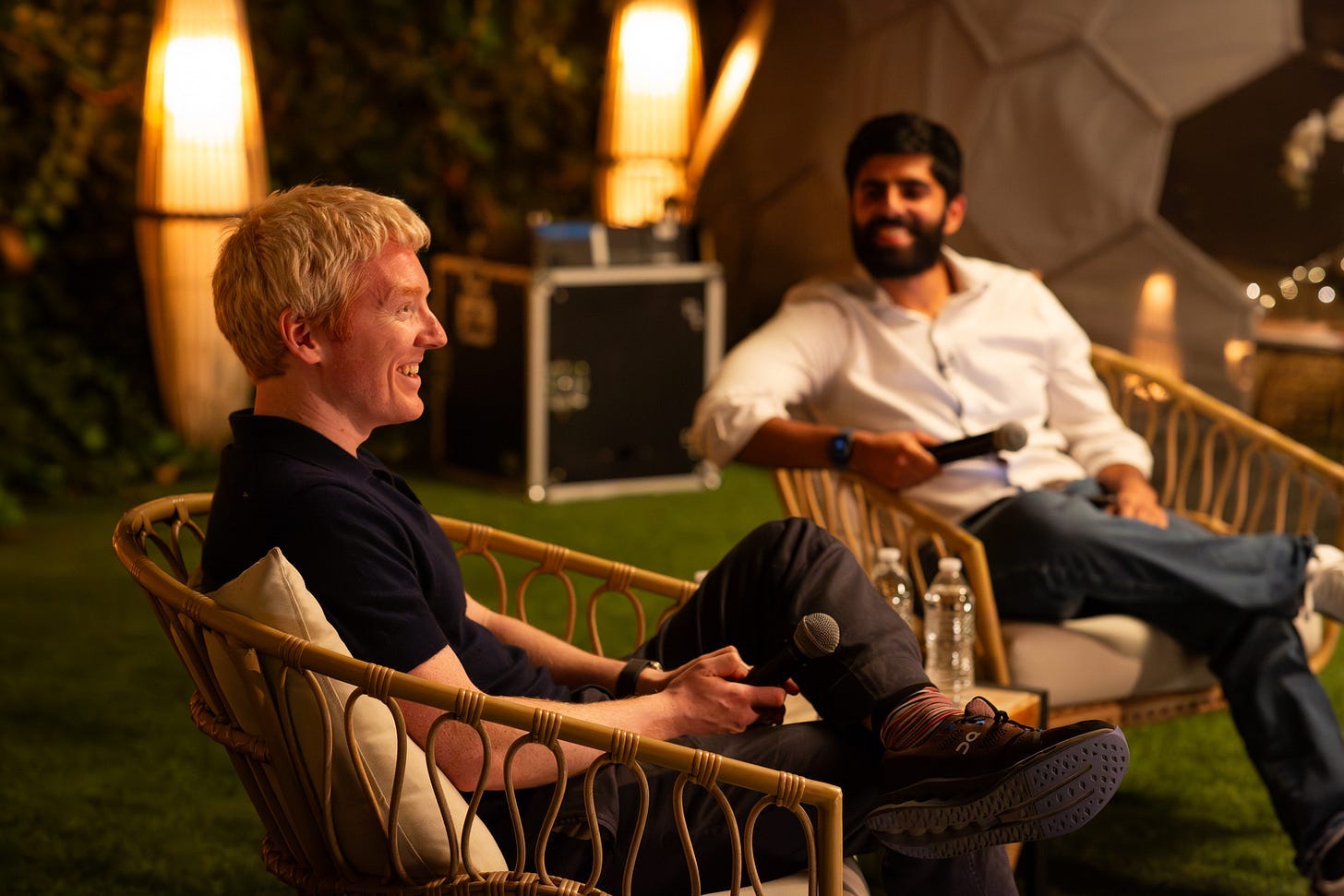
This newfound legitimacy became a key he could use to unlock doors that had previously been welded shut. He was now aiming for the absolute summit, for guests like Patrick Collison of Stripe or Ilya Sutskever, the chief scientist of OpenAI. At the time he reached out, he was still “a nobody.” To get them to say yes, he knew he had to deliver an undeniable demonstration of his seriousness. He transformed his approach, spending a full week, full-time, on a single potential guest. He would immerse himself in their work, their interviews, their papers, and from this deep well of research, he would craft a bespoke list of questions. He would send this list in the initial cold email, a document designed to prove that the conversation he was proposing would be “nothing like any of the pitches you've heard over the last year,” not from other podcasters, and not even from the legacy media outlets that regularly courted them. It was a strategy of radical preparation, an offering of intellectual labor upfront that made his requests impossible to ignore.
“You Should Charge 5X That”
The project now had prestige, but it still had no real revenue. It was a friend, Dylan Patel, who provided the necessary push to transform it into a business. Dwarkesh was starting to get sponsorship interest, and when he told Dylan how much he was charging, his friend was blunt. You should be charging at least five times that, he insisted. It’s a lesson he took to heart, that from the outside, it is “often clearer that you can charge more for something.” On his next sponsor call, steeling himself, he quoted the new, absurdly high number. The sponsor didn’t even blink at the order of magnitude. They couldn’t do 5X, they said, but they could do 4X. He paused, feigning consideration. “I’ll have to think about it,” he replied. It was a bluff, but it worked. The deal was made. The podcast was no longer just a passion project subsidized by a grant; it was a self-sustaining enterprise. The kid who had been loafing around his parents’ house had, almost by accident, built himself a career.
Why Podcasting Is Not Competitive
The career that had been willed into existence through a combination of relentless preparation, serendipitous validation, and a stranger’s unsolicited faith was now a stable, self-sustaining enterprise. He had arrived. But arrival is not a destination; it is a plateau from which one can see the surrounding landscape more clearly. From this vantage point, he began to articulate a formal mission for the work, a purpose that had been implicit all along but now required a name. The project, he decided, was simply an effort “to develop a better model of the world,” for himself and for anyone else who chose to listen. It was a grand, perhaps unachievable, ambition, but it was the only one that felt true.
He views the work itself with a striking lack of mystique. What he does, he explains, is fundamentally “very simple. It’s not easy, but it’s simple.” You prepare a lot, and then you interview people. The surprising thing, he reflects, is that this field, which seems so saturated with millions of podcasts, is actually “not that competitive.” Not in the way that becoming a world-class concert pianist is competitive, where you are pitted against “a hundred thousand Asian kids who have been like practicing six hours a day.” Not in the way that making partner at a prestigious law firm is competitive, a world with immense “optimization pressure.” Podcasting, and even blogging, he realized, were fields where there were not that many people who were treating it with the obsessive, full-time seriousness of a craft. It was a dream job that was strangely available, a career path where you could get to choose a topic you’re interested in, and your full-time job becomes to “understand this as well as possible,” and then share that understanding with the world.
Now, he is looking beyond the limits of the format he has mastered. The interviews will continue, a crucial engine for learning, but he recognizes their ceiling. There are certain questions, essential questions for understanding the future, that simply “cannot be answered extemporaneously.” You cannot simply ask an expert how far away AGI would have to be for China to have a better chance of developing it first and expect a coherent, fully-reasoned answer on the spot. The question requires a careful breakdown of precursor knowledge—projections for energy capacity, for domestic chip manufacturing, for geopolitical stability. These are the kinds of questions that demand the slow, deliberate architecture of a written essay. This is the next frontier: moving from being a skilled extractor of information to a synthesizer of it, publishing his own takes on the grand, complex questions that keep him up at night.
The solo venture has become a small, dedicated team. He is supported by a roster of editors and a general manager who share his deep care for the mission. He sees their collective impact not as a series of dramatic conversions, but as a “very diffuse” influence. It is the possibility that a million people, many of them in “extremely important positions in government or in business,” will have a slightly better, more nuanced understanding of AI, or history, or energy policy. As the stakes of the future intensify, the value of putting “all the cards on the table” feels increasingly urgent.
He often wonders about the other paths, the lives he did not lead. Until just a couple of years ago, he was still planning to pivot, to finally build a company. He had notebooks full of ideas, many of them “shitty GPT wrapper ideas” from the early days of the technology. One was an AI that would perform retrieval-augmented generation over the entire U.S. federal code of statutes. Another involved scraping the entirety of Z-Library to create some kind of novel book search engine. He acknowledges that these initial concepts were “terrible,” but then again, so were his first podcasts. He thinks about the counterfactuals, the other versions of himself. “I wonder if there’s an alternative world where I’m like, business turned out really well,” he muses, “and I’m so glad I didn’t like stay podcasting or something.” But he suspects not. The path he is on feels less like a choice he made and more like a current he was swept into, one that, against all odds, carried him exactly where he was supposed to be.